

How to Recover from Burnout: A Step-by-Step Plan

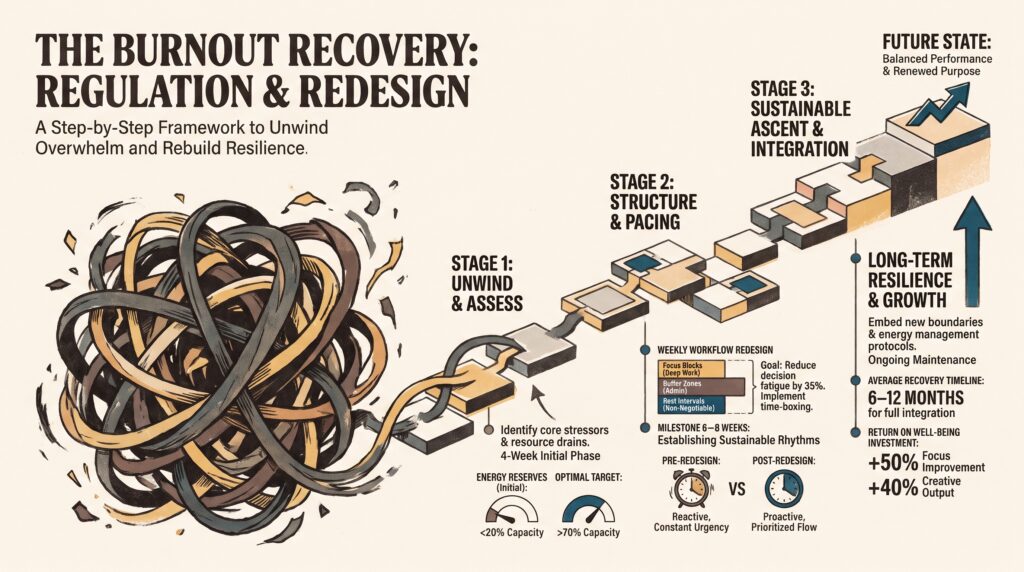
Key Takeaway: To recover from burnout, pair short daily nervous-system regulation with real changes to the workload, control, and boundaries that caused it. Add professional support and return gradually to full performance. A vacation, productivity hack, or mindfulness exercise alone rarely solves it. Early burnout may improve within a few weeks, while severe burnout can take one to three years [3][4]. If symptoms are intense, persistent, or affecting your safety or daily functioning, consult a qualified healthcare professional.
Why Burnout Recovery Requires More Than Rest
You take the weekend off. You sleep. You even leave town. Then Monday arrives, and the same heaviness is waiting: irritability, fog, detachment, and a strange inability to start work that used to be routine.
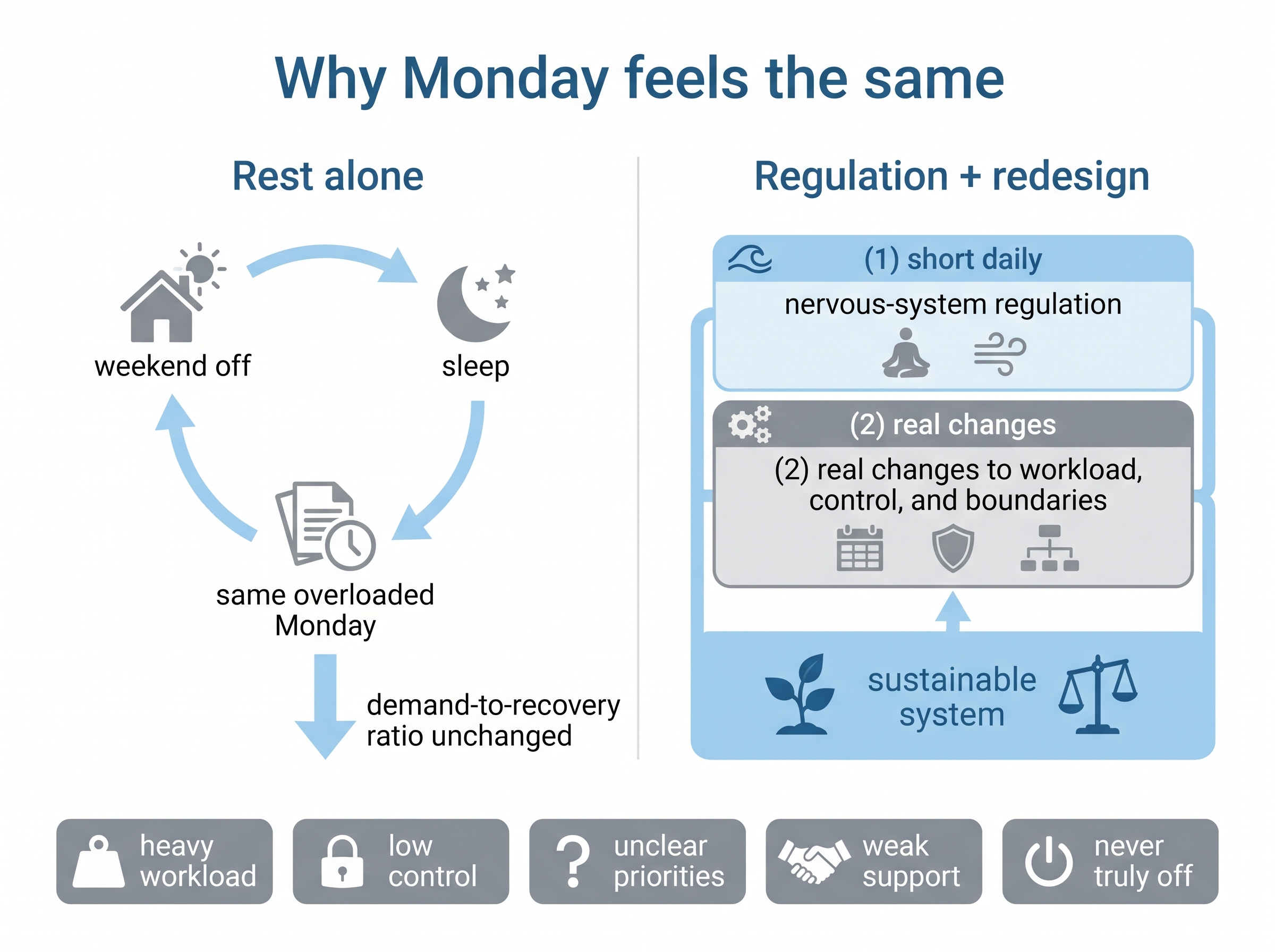
This pattern is common because burnout is tied to the conditions around work, not only to personal stamina. Heavy workload, low control, unclear priorities, weak support, and the feeling that you can never truly stop all feed it [2].
The problem is widespread. In the American Psychological Association’s 2024 Work in America survey, 67% of workers reported at least one outcome associated with burnout, as compiled by E-Monitor [8]. A secondary report citing Deloitte figures says 40% of managers felt their mental health deteriorated after moving into leadership, and 82% of executives reported exhaustion symptoms [9].
For leaders who cannot pause the business, recovery means regulation plus redesign, not a longer weekend. This roadmap covers six steps:
- Estimate whether your symptoms resemble occupational burnout and how severe they seem.
- Use five-minute recovery practices during the workday.
- Set realistic expectations by severity.
- Change the workload and conditions that created the problem.
- Use AI selectively to remove repetitive cognitive work.
- Treat mindfulness as support, not a substitute for structural change.
This article is educational. It does not diagnose burnout or replace medical, psychological, or workplace guidance.
What Burnout Is and How to Estimate Your Current Severity
The World Health Organization’s ICD-11 classifies burnout as an occupational phenomenon resulting from chronic workplace stress that has not been successfully managed [1]. It is not a medical diagnosis in itself, and it is not simply being tired. It is a pattern of depletion connected to work conditions [1].
ICD-11 and the Maslach framework describe three dimensions [1][5]:
- Exhaustion: persistent physical, emotional, or cognitive depletion.
- Cynicism or detachment: growing negativity, numbness, irritability, or distance from work and colleagues.
- Reduced professional efficacy: feeling ineffective or unable to perform at your previous level.
Burnout can overlap with depression, anxiety, sleep disorders, grief, medication effects, and other medical problems. Similar symptoms do not mean the same condition. If symptoms are severe, unclear, or escalating, get a professional assessment.
⚠️ Same symptoms are not the same condition
Burnout is classified as an occupational phenomenon, not a medical diagnosis. Exhaustion, crying, fog, and hopelessness can also come from depression, anxiety, sleep disorders, grief, medication effects, or other medical problems. If symptoms are severe, unclear, escalating, or affecting safety, get a qualified professional assessment rather than self-labeling.
Practical self-check for leaders
Use this checklist to notice patterns, not to label yourself:
- Sleep does not restore your energy.
- Minor decisions feel unusually difficult.
- Emails and routine tasks trigger disproportionate irritation.
- You avoid conversations or responsibilities that used to be manageable.
- Work continues in your head after hours.
- Mistakes, forgetfulness, or missed deadlines increase.
- Emotional reactions become harder to regulate.
- You feel detached from outcomes.
- Rest creates guilt rather than relief.
- Headaches, muscle tension, digestive symptoms, or frequent illness appear.
Behavior often changes before formal scores do. ReachLink reports that behavioral markers tend to emerge two to four weeks before Maslach Burnout Inventory (MBI) scores shift to higher severity [5]. That makes this checklist useful as an early-warning tool, though it does not replace the licensed MBI or a clinical evaluation.
| Possible level | Typical pattern | Recommended next step |
|---|---|---|
| Early or mild | Temporary exhaustion, irritability, reduced focus, some recovery after rest | Reduce demands now and monitor symptoms for two to four weeks |
| Moderate | Persistent exhaustion, detachment, impaired concentration, reduced performance | Contact a healthcare or mental health professional and negotiate workload changes |
| Severe | Inability to function normally, severe distress, persistent physical symptoms, hopelessness, or safety concerns | Seek prompt professional support; consider medical leave or urgent care where appropriate |
How Long Burnout Recovery Takes by Severity
There is no universal burnout recovery timeline. Early burnout may ease within weeks, moderate burnout often takes months, and severe burnout can take years [3][4].
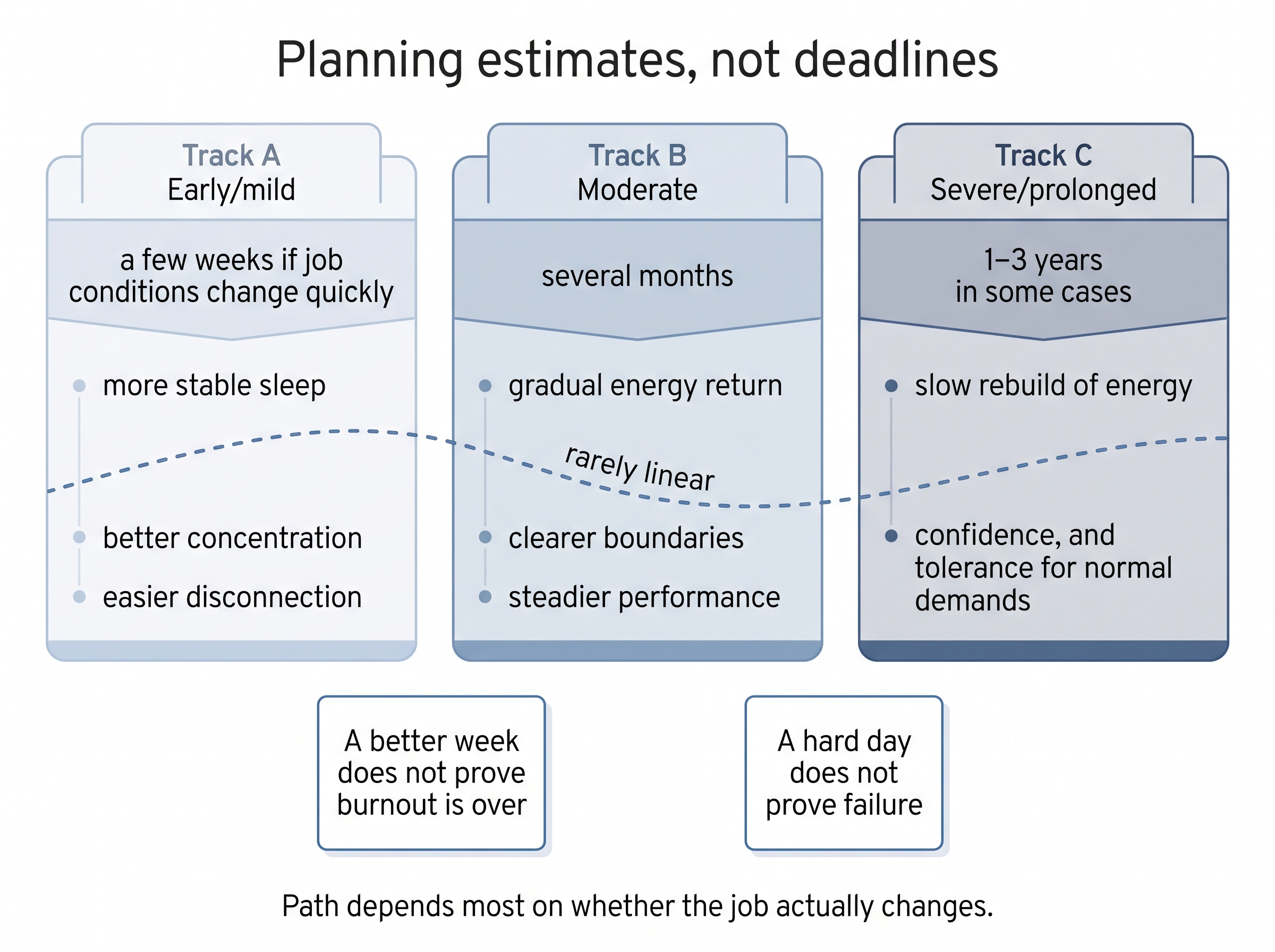
Several factors shape the path [3]: severity and duration of symptoms, sleep and physical health, caregiving and financial pressure, access to support, and—most importantly—whether the job actually changes.
| Burnout presentation | Broad planning estimate | What improvement may look like |
|---|---|---|
| Early or mild | A few weeks, if changes happen quickly [3] | More stable sleep, better concentration, fewer stress reactions, easier disconnection |
| Moderate | Several months [3] | Gradual return of energy, better emotional regulation, clearer boundaries, steadier performance |
| Severe or prolonged | 1–3 years in some cases [4] | Slow rebuilding of energy, confidence, work capacity, and tolerance for normal demands |
These ranges come from practitioner guidance, not clinical guarantees. Treat them as orientation, not deadlines. Recovery is rarely linear: a better week does not prove burnout is over, and a hard day does not prove failure.
How to know when burnout is improving
Look for observable markers rather than a finish line: resting without guilt, easier decisions, less intense reactions, less after-hours rumination, fewer physical symptoms, returning interest outside work, and noticing your limits before a crisis forces you to.
How to Recover from Burnout While You Are Still Working
If extended leave is impossible, start with small, repeatable reductions in physiological stress and decision load, then negotiate larger changes to the job itself.
For many leaders, recovering while still working is the hardest part of the problem. With 67% of workers reporting burnout-related outcomes [8], most people cannot simply step away.
Five-minute in-workday recovery protocol
| Situation | Five-minute intervention | Purpose |
|---|---|---|
| Before a difficult meeting | Slow breathing (a gentle 4-7-8 pattern if comfortable); name the one outcome that matters | Lower reactivity |
| After a high-intensity meeting | Step away, drink water, stretch; do not open another channel immediately | Create a transition |
| When the inbox feels unmanageable | Sort into urgent, important, delegated, and deferred | Cut decision overload |
| During repeated interruptions | Protect a focus block and silence nonessential notifications | Restore attention control |
| At day’s end | Park unfinished tasks, choose tomorrow’s first action, close work apps | Stop mental carryover |
Breathing techniques are regulation tools, not cures. If a breathing pattern makes you dizzy or more anxious, stop and breathe normally.
Daily “minimum viable recovery” plan
Keep the plan small enough to survive a bad week: one screen-free meal, one short walk, one fixed shutdown time, one delegated or deleted task, and one honest conversation with a trusted person, manager, coach, therapist, or clinician.
Micro-recovery is a bridge. It cannot replace adequate staffing, realistic deadlines, or reasonable expectations.
Decision-load triage framework
Sort recurring decisions and tasks into four groups:
- Must remain with me: high-consequence decisions that need leadership judgment.
- Can be delegated: work someone else can complete with clear standards.
- Can be automated: repetitive information handling, reminders, summaries, or workflow triggers.
- Can be eliminated: tasks kept alive only because they have always existed.
Run this triage weekly for a month. Most leaders find the “must remain with me” list is shorter than expected. If symptoms persist despite these steps, professional help is not a failure; it is often the shortest route to clarity.
Why a Vacation Alone Usually Does Not Prevent Burnout Relapse
Time off can reduce immediate strain. It usually does not resolve burnout if the same workload, low control, and boundary violations return, because the demand-to-recovery ratio stays out of balance [2].
The return-to-work problem
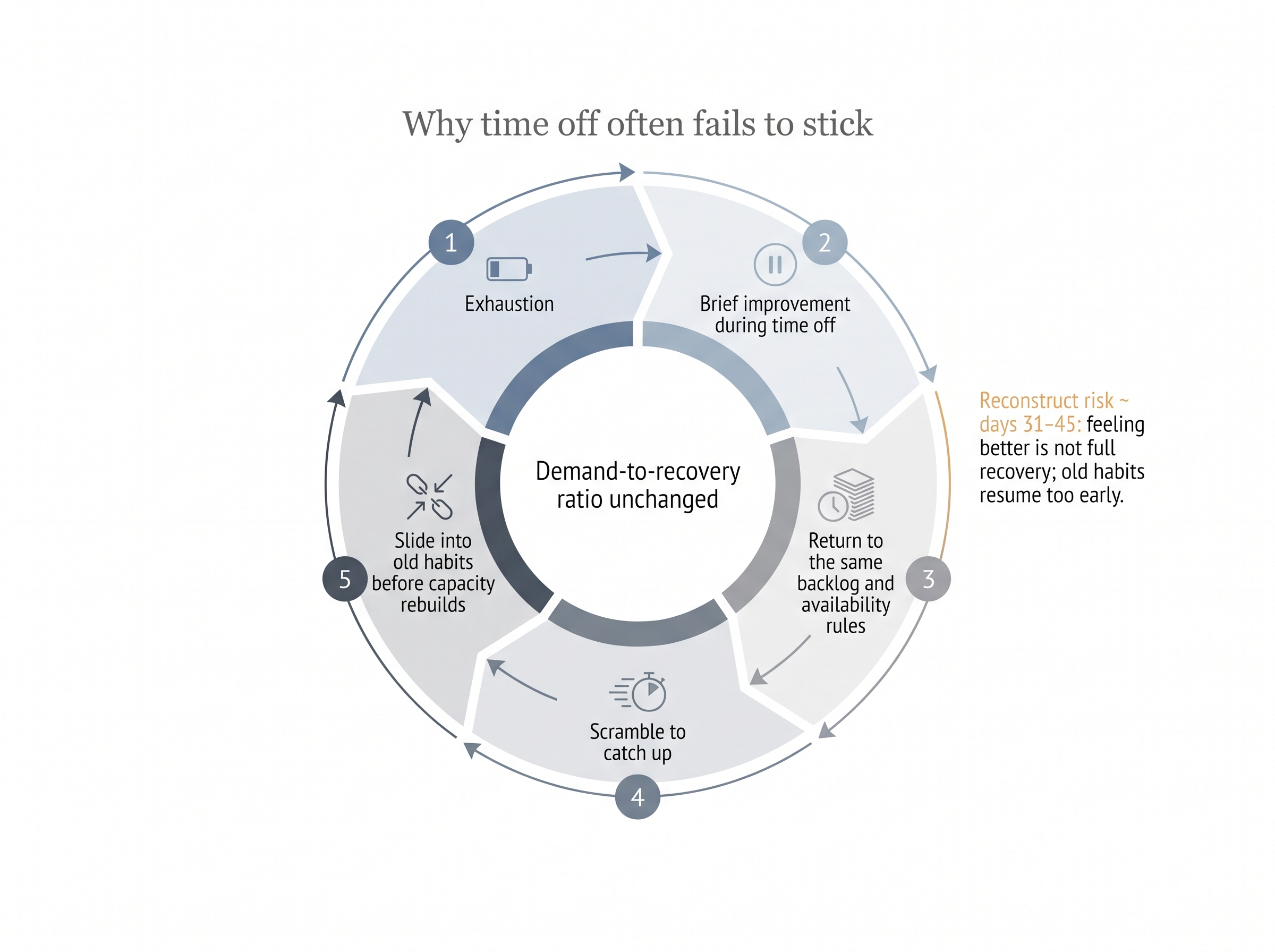
The pattern is predictable: exhaustion, brief improvement during time off, return to the same backlog and availability rules, a scramble to catch up, then a slide back into old habits before capacity has rebuilt.
Design your return before you leave:
- Lighten week-one meetings.
- Define what will wait.
- Reconfirm priorities with your team or board.
- Set communication windows.
- Name a backup for urgent decisions.
- Schedule a workload review after two weeks—not after the next crisis.
A relapse-prevention framework
Ask three questions: What demand caused the most damage? What boundary failed repeatedly? What observable workplace change will prevent the same pattern?
Feeling better can be risky. Vistage describes a “Reconstruct” phase around days 31–45, when leaders may resume old habits too early because resilience has not fully returned [6]. Functioning again is not proof of complete recovery; exhaustion can linger even when performance looks normal.
Use AI to Reduce the Workload That Contributed to Burnout
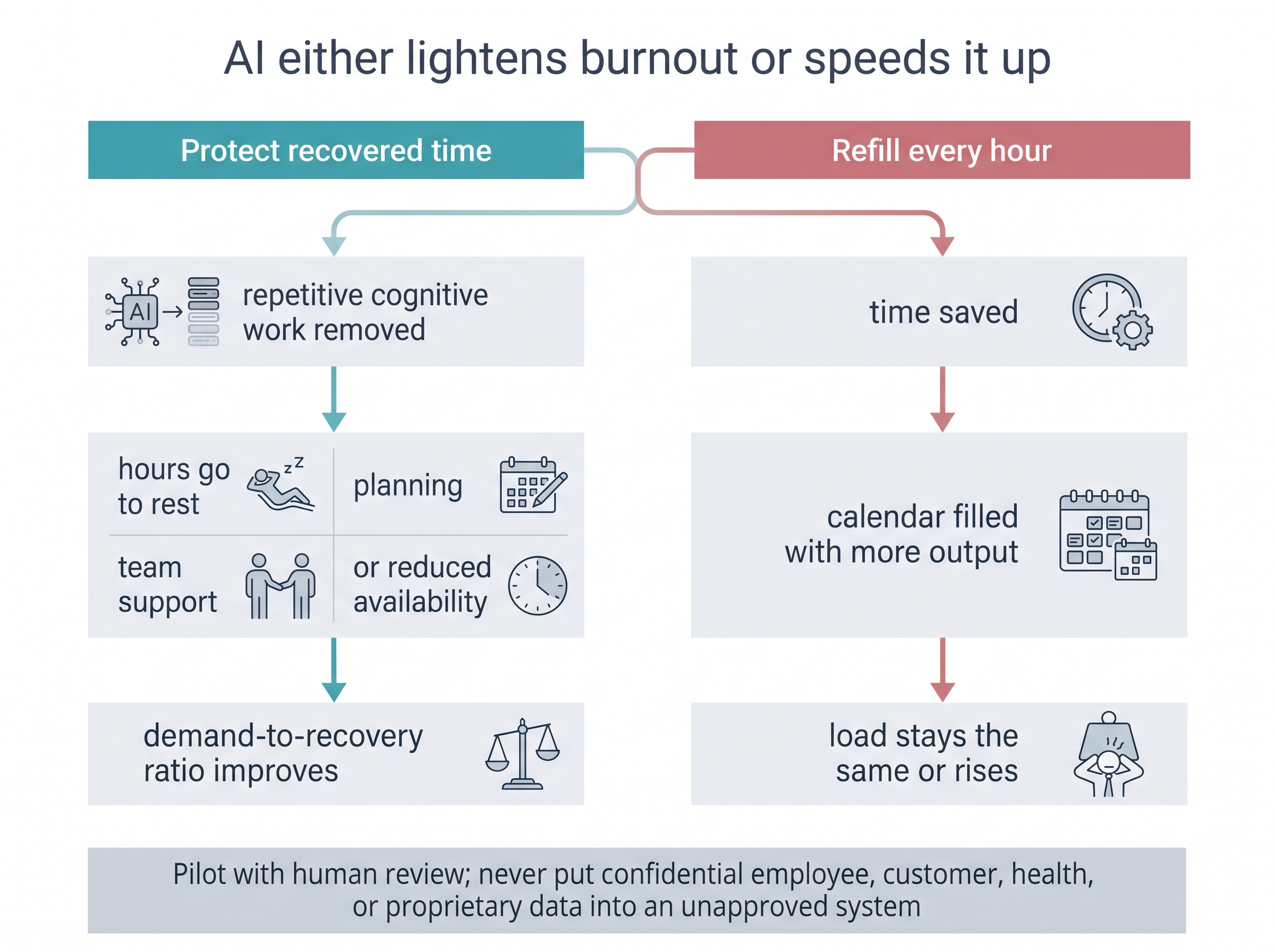
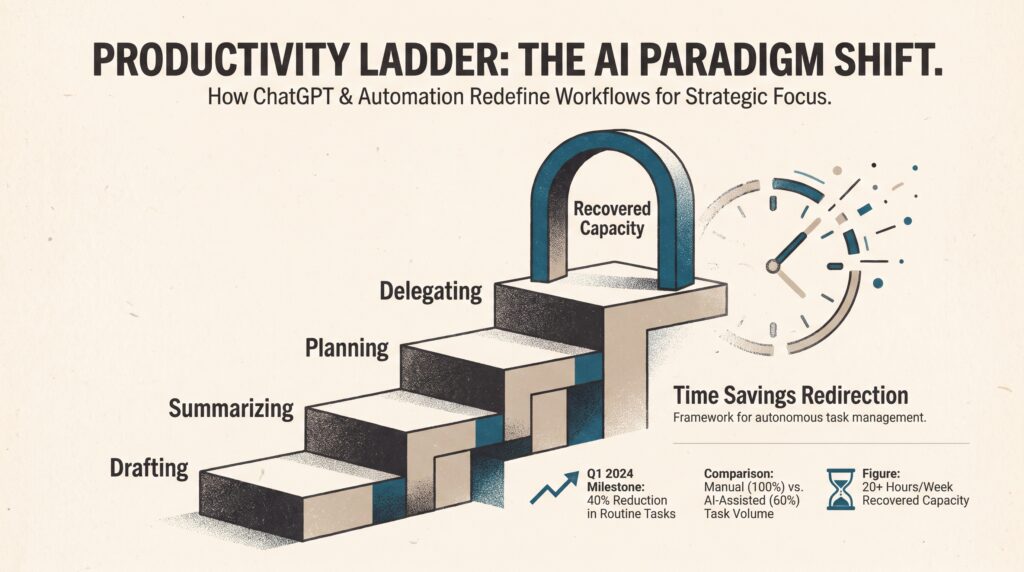
AI supports burnout recovery when it removes repetitive cognitive work and makes workload visible. It backfires when every saved hour is refilled with more output. That distinction matters for leaders: in the Deloitte figures cited earlier, 40% of managers reported declining mental health after taking on leadership roles [9]. Automation should reduce that load, not accelerate it.
A workload-reduction process
- List the five recurring tasks that drain the most energy.
- Estimate weekly time spent on each.
- Label each for automation, delegation, simplification, or elimination.
- Run a small pilot with human review.
- Decide in advance to reinvest recovered time in rest, planning, team support, or reduced availability.
- After two weeks, check whether effort actually fell—or merely shifted.
Practical uses include routine summaries, meeting notes and action items, first-pass status reports, urgency sorting, repeatable checklists, and flags for recurring after-hours work.
Do not enter confidential employee, customer, health, or proprietary data into an AI system without organizational approval. Implementation quality, privacy, and human oversight decide whether automation helps. A tool that adds review work or new notification streams can increase decision load rather than reduce it.
What Mindfulness Can and Cannot Do for Burnout
Mindfulness can strengthen resilience and help regulate attention and stress. It does not reliably reduce core emotional exhaustion, and it cannot compensate for impossible workloads, unsafe management, or chronic understaffing [10].
Position mindfulness within a recovery stack
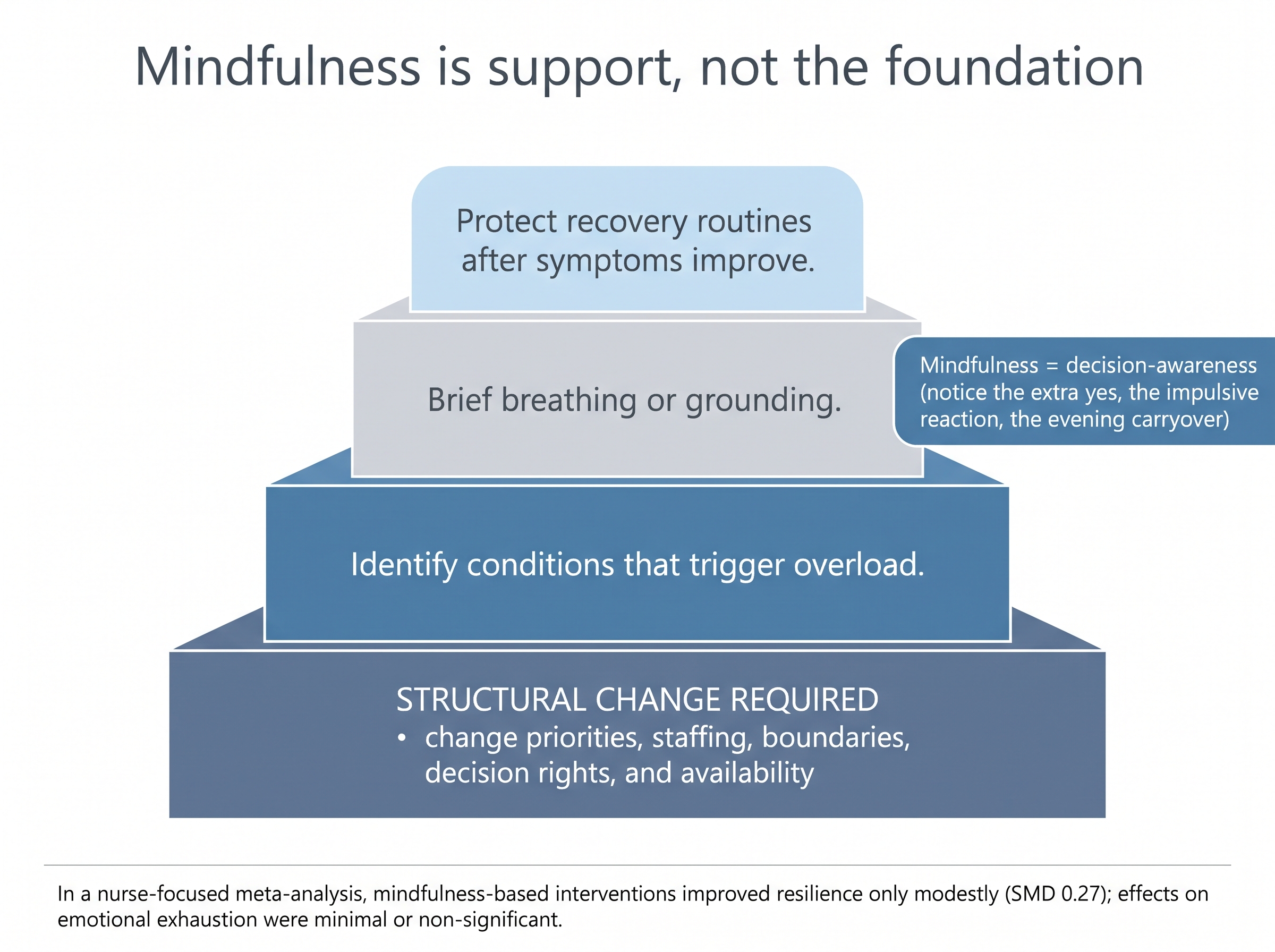
Use this order: brief breathing or grounding; identify the conditions that trigger overload; change priorities, staffing, boundaries, decision rights, and availability; then protect recovery routines after symptoms improve.
Mindfulness is most useful as a decision-awareness tool. It can help you notice the moment you are about to accept another unnecessary commitment, react impulsively, or carry work into the evening. It should not become a demand to stay calm while the organization stays the same.
Myth versus reality
| Myth | More accurate interpretation |
|---|---|
| Mindfulness cures burnout | It may support regulation but does not remove harmful demands |
| If meditation fails, recovery is impossible | People need different mixes of rest, therapy, medical care, boundaries, and workload change |
| Calm leaders can tolerate unlimited work | Sustainable performance still needs realistic capacity and organizational support |
The evidence is modest. A systematic review included 11 studies with 1,194 nurses, and 10 trials (835 participants) contributed to the meta-analyses. Mindfulness-based interventions improved resilience with a small effect (SMD = 0.27), while effects on emotional exhaustion were minimal or non-significant [10]. Because nurses differ from corporate leaders, the findings may not transfer directly.
What Practitioners and Communities Emphasize
Practitioner and community sources converge on a few points: recovery needs a multi-part approach that fits the person; rest alone is not enough; structured plans reduce the overwhelm of not knowing where to start; and self-care works best alongside therapy, medical care, or coaching. Stopping is also a skill. As one community member put it, “Burnout isn’t just about having too much to do—it’s about how we decide when to stop.”
STL Mental Health frames the goal: “True recovery involves rebuilding physical energy, restoring emotional resilience, and creating sustainable habits.” — STL Mental Health
HealthDay stresses individual fit: “Burnout affects everyone differently.” — HealthDay
A practitioner source reports that a 10-week coaching program for leaders decreased burnout symptoms and increased vigor [7].
Frequently Asked Questions About Burnout Recovery
Can burnout cause constant crying?
Depletion can lead to frequent crying, but constant crying can also signal depression, anxiety, grief, trauma, or another health issue. If it is persistent, worsening, or paired with hopelessness or thoughts of self-harm, contact a qualified professional promptly.
How do I recover from burnout if I cannot take a break?
Use five-minute regulation, decision triage, shutdown routines, and workload negotiation while you keep working. Persistent or severe symptoms may require professional care, medical leave, or a formal workplace adjustment.
What does burnout feel like?
Common experiences include persistent exhaustion, detachment, irritability, poor concentration, and ordinary tasks taking disproportionate effort, sometimes with sleep problems, headaches, tension, numbness, or lower confidence [1]. Because similar symptoms occur in other conditions, an assessment may be appropriate.
How do I know when burnout is over?
Recovery is likely underway when energy, concentration, emotional flexibility, and interest outside work return consistently, and you can disconnect without intense guilt. Increase demands gradually; returning to a full workload too quickly can trigger relapse [6].
How severe is my burnout?
Consider how long symptoms have lasted, whether sleep restores you, how much your functioning has changed, and whether things are escalating—rather than relying on an online score. A clinician can assess possible burnout and rule out depression, anxiety, sleep disorders, medication effects, or other conditions [1].
Does burnout go away on its own?
It may improve when demands decrease and recovery becomes consistent, but it often returns if the conditions that caused it stay the same [2]. Seek help sooner when functioning, safety, or physical health is affected.
Limitations, Alternatives, and Professional Guidance
Burnout timelines and symptom descriptions here are educational estimates, not diagnoses. The cited research uses different populations, occupations, and measures, so findings from nurses, surveys, or executives may not apply to you [8][10].
Get professional support when symptoms are severe, persistent, or accompanied by depression, panic, substance misuse, inability to function, or thoughts of self-harm. Contact a primary care clinician, licensed mental health professional, or employee assistance program. In the US, you can call or text 988 to reach the Suicide & Crisis Lifeline. Call emergency services when safety is at risk.
Executive coaching may help some leaders rebuild sustainable routines, but the 10-week program result comes from a practitioner source, not independent clinical evidence [7].
Other options worth discussing with your employer or clinician include renegotiating workload, leave, flexible hours, additional staffing, therapy, and formal accommodations.
Conclusion — Recovery Means Redesigning Work, Not Enduring It Better
Burnout recovery works best as a sequence, not a single fix:
- This week: start five-minute regulation, a fixed shutdown time, and decision-load triage.
- This month: negotiate concrete changes to workload, availability, and boundaries—and book a professional assessment if symptoms are moderate or worse.
- Ongoing: use AI to remove repetitive work rather than refill every hour, use mindfulness to notice pressure and choose differently, and treat the severity-based timeline as a guide, not a deadline.
The goal is not to tolerate an unsustainable job more efficiently. It is to change the conditions that made exhaustion rational.
Read the free first chapters of Workaholic’s Detox by Dr. Kara Larson at drkaralarson.com/freebies/. For practical routines and guided breathing, continue with Productivity in Your Pocket.
About Dr. Kara Larson
Dr. Kara Larson is the author of Workaholic’s Detox. She helps business owners, managers, and corporate leaders build sustainable performance through emotional resilience, practical productivity systems, leadership accountability, mindfulness, and responsible AI integration.
Transparency statement
This article draws on Forward Family Medicine, Welltory, Wellman Psychology, Women’s Mental Health Specialist, ReachLink, Vistage, Sigma Forces, E-Monitor (APA survey data), Digital-Chiefs, and PubMed. Findings are educational and not individualized medical advice.
References
[1] Burnout: Signs, Health Consequences, and Recovery Strategies
[2] Burnout, explained: what it is and how recovery works
[4] How To Plan For Your Burnout Recovery Timeline
[5] Maslach Burnout Model: Three Dimensions That Predict Collapse
[6] CEO Burnout Recovery: How Leaders Rebuild | Vistage
[7] Stress Management Techniques for Executives: A Complete Guide to Thriving Under Pressure
[8] 60+ Employee Burnout Statistics (2026) | E-Monitor
Responses